Training the Operators Behind the Future of Sustainable Aviation Fuel
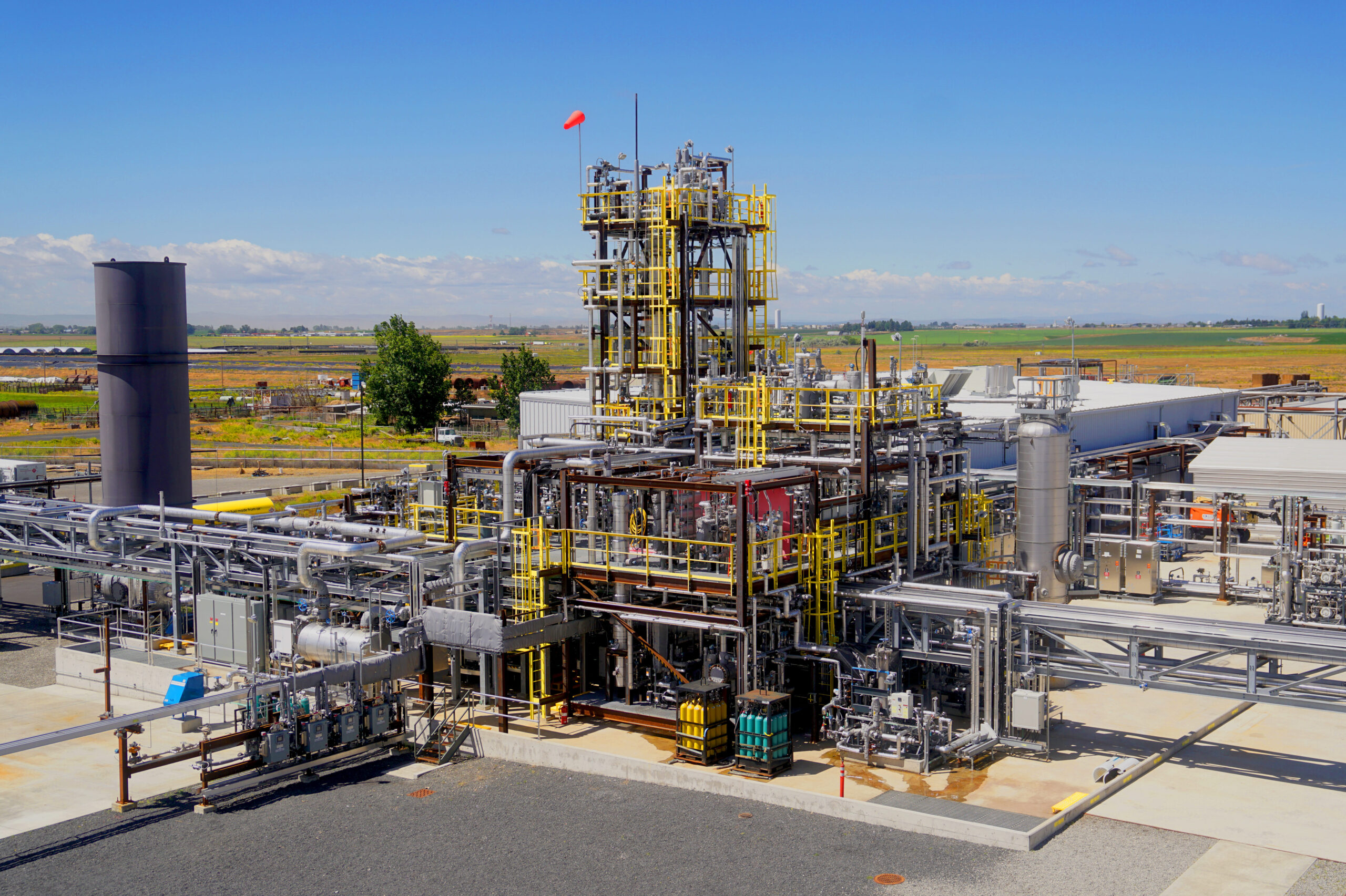

Operator Training Simulator – Sustainable Aviation Fuel Demonstration Plant

The transition towards more sustainable aviation fuels requires innovative production technologies and highly skilled operators. For a demonstration-scale Sustainable Aviation Fuel (SAF) plant in North America, Inprocess, a Quadrante Group company, developed a high-fidelity Operator Training Simulator (OTS) to prepare operational teams for the complexities of emerging fuel production processes.

Combining advanced process simulation with realistic control system environments, the solution provides a safe, virtual setting to develop operational expertise before and during plant operations.

At the heart of the solution is a high-fidelity dynamic simulation model incorporating advanced technologies, including CO₂ electrolysis and Fischer–Tropsch synthesis. Developed using a commercial dynamic process simulator, the OTS was integrated with a replica of the plant’s Distributed Control System (DCS) through the Inprocess Infrastructure Suite (IIS).

The project included two complementary configurations: an Early OTS using an emulated control environment and a Direct-Connect OTS linked to the replicated DCS. Together, they enable operators to practise start-ups, shutdowns, emergency scenarios and control strategies under realistic conditions. The system was also designed to support future applications as a process digital twin, with dedicated training for instructors and engineers to ensure long-term operability and knowledge transfer.

Market

USA

Sector

Digital Twin | Energy

Location

North America

Client

U.S.-based sustainable fuels technology developer and plant operator

Preparing operators to manage complex and emerging production technologies is essential to the safe and reliable operation of sustainable fuel facilities.

Through realistic simulation of normal operations, critical transitions and emergency conditions, the OTS strengthens operational readiness, supports knowledge retention and allows control strategies to be explored without exposing the physical plant to risk.

Beyond its immediate training function, the platform establishes a foundation for future process digital twin applications, extending the value of simulation throughout the plant’s operational lifecycle.